Headend systems
Video headend solutions

Super Headend with central content processing

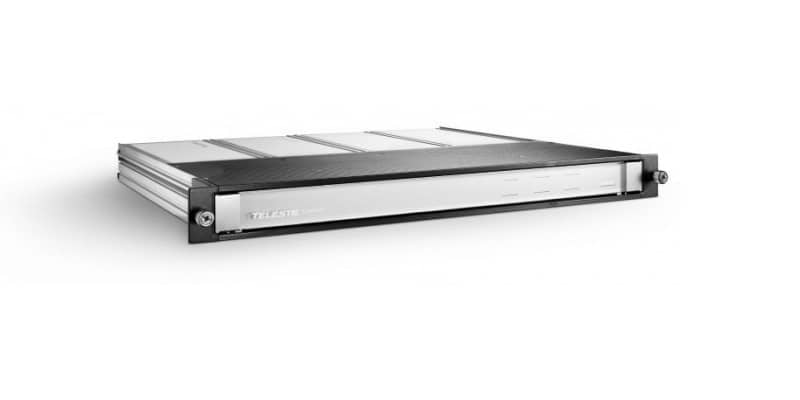
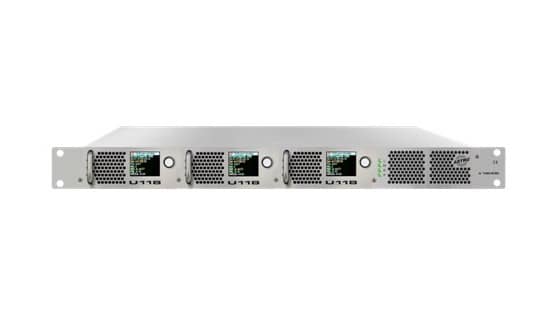
The category includes high-performance, central content processing solutions that enable efficient, scalable and secure management of broadcast and IP-based media content. These systems are key elements of modern service provider infrastructure, where signals from various sources (DVB, IP, OTT) are processed, compressed, multiplexed and transmitted.

Thanks to their modular structure, these devices can be flexibly adapted to service provider needs, whether it is a small regional center or a large national headend system. The solutions support the latest video encoding technologies (e.g. HEVC), as well as traditional broadcast and modern IP distribution architectures.

One of the biggest advantages of Super Headend devices is centralized processing, which reduces operating costs, simplifies network management and improves service quality. Advanced redundancy and high availability ensure continuous and uninterrupted access to business-critical media content.

Statistical multiplexing with central content processing

The category includes advanced content processing solutions that dynamically allocate available bandwidth among multiple video channels based on current bitrate requirements. As a result, spectrum utilization efficiency increases significantly, while image quality remains continuously optimized even with changing content.

The systems in this category operate in a central headend environment and are capable of processing, encoding and multiplexing dozens or even hundreds of channels in real time. Statistical multiplexing is particularly beneficial for platforms with a large number of channels, where the complexity of the content is constantly changing (e.g. sports, movies, news channels).

The solutions support modern encoding standards (e.g. MPEG-4 AVC, HEVC) as well as DVB and IP-based distribution chains in an integrated manner, so they can be easily integrated into a hybrid broadcast-IP environment. Central control and monitoring enable full network optimization, reducing operating costs and improving service quality.

Universal Edge (QAM) solutions

The category includes modern, flexible processing platforms that ensure efficient conversion and transmission of broadcast and IP-based content over QAM (Quadrature Amplitude Modulation)-based cable networks. These devices play a key role in modern HFC and DOCSIS infrastructures, where IP-based content is delivered to traditional RF environments.

The solutions in this category can be easily adapted to different network sizes and service provider needs thanks to their modular and scalable architecture. These platforms support IP-to-QAM conversion, multiplexing, scrambling and other headend functions, thus acting as complete edge processing nodes. One of the biggest advantages of universal edge systems is their multifunctionality, which allows multiple services – such as DVB-C, IPTV or OTT – to be served simultaneously within a single device. In addition, advanced management and monitoring functions contribute to optimizing network operation and reducing operating costs.

Broadcast encoder/transcoder headend

Broadcast encoder and transcoder headends are key elements of modern media service infrastructure, ensuring efficient processing, compression and format conversion of video and audio content from various sources. These systems enable content to reach end users in optimal quality and bandwidth utilization over various networks, such as DVB, IPTV or OTT platforms.

These solutions offer a modular and high-performance platform that supports the latest encoding standards, such as MPEG-4 AVC and HEVC technology. This significantly reduces the bitrate required for transmission, while maintaining high image and sound quality. Transcoder functions allow different incoming formats (SD, HD, UHD) to be handled uniformly and converted on demand.

One of the biggest advantages of the systems is their flexible configurability and scalability, which allows for gradual expansion as service providers’ needs grow. Advanced redundancy and High availability ensures the continuous operation of business-critical services, minimizing the risk of outages.”

DAA video headend (vVideo, Video Aux Core)

DAA (Distributed Access Architecture) video headends are key elements of modern, virtualized cable networks, enabling efficient integration of traditional broadcast video services into IP-based infrastructures. The vVideo and Video Aux Core solutions play a central role in the transition between the RF and IP world, ensuring flexible processing, management and distribution of video content in the DAA architecture.

The platforms in this category offer scalable, software-centric solutions that support the simultaneous serving of linear broadcast, IPTV and OTT services. These systems enable the central preparation, multiplexing and efficient IP-based transmission of video streams to DAA nodes. One of the most significant advantages of DAA video headends is the virtualization and centralization of functions, which reduces network complexity while increasing flexibility and resource utilization. The systems support DOCSIS and Remote PHY/Remote MACPHY architectures, allowing for seamless integration into the most modern HFC network environments. Advanced management and automation capabilities enable service providers to rapidly deploy and optimize video services, while high availability ensures continuous availability of business-critical content.

OTT MBR / ABR transcoding for streaming service

OTT MBR (Multi Bitrate) / ABR (Adaptive Bitrate) transcoding solutions are essential technological elements of modern streaming services, ensuring that video content is available in optimal quality across different network environments and devices. These systems generate multiple bitrate streams from the same source, enabling dynamic quality switching based on the user’s bandwidth and device.

The solutions in this category provide a high-performance, scalable platform for serving OTT and streaming services. These devices support the latest video encoding technologies (e.g. HEVC) and are capable of generating multiple profiles and bitrates in parallel with low latency.

One of the biggest advantages of hardware acceleration is the outstanding efficiency and performance, which allows for cost-effective processing of live or VoD content with a large number of channels. GPU- and VPU-based architectures offer flexible capacity expansion, so they can be easily adapted to growing subscriber needs.

These systems are ideal for IPTV/OTT platforms, streaming for service providers and content aggregators where stable, adaptive and scalable video distribution is critical. Solutions in this category contribute to an excellent user experience while optimizing bandwidth usage and operational costs.”

OTT MBR/ABR local encoder for streaming service

These solutions are compact, high-performance systems that enable on-premises (edge

Kapcsolódó anyagok
Központosított I-CCAP rendszerek üzembe helyezése
DAA, CAA rendszerek üzembe helyezése és költséghatákony fejlesztése
Hirid lorem ispum dolorum sit amet üzembe helyezése.
DAA, CAA rendszerek üzembe helyezése és költséghatákony fejlesztése
Letölthető anyagok
Hibrid I-CCAP és DAA rendszerek
Ismerje meg részletesen a központosított és elosztott szolgáltatási modellt.
Hibrid I-CCAP és DAA rendszerek
Ismerje meg részletesen a központosított és elosztott szolgáltatási modellt.
Hibrid I-CCAP és DAA rendszerek
Ismerje meg részletesen a központosított és elosztott szolgáltatási modellt.
További bejegyzések a témában
Lépjünk kapcsolatba és építsük együtt a jövő hálózatait

Kérdésed van, vagy egyedi megoldásra van szükséged? Vedd fel velünk a kapcsolatot, és segítünk megtalálni a legjobb technológiai utat a céljaidhoz.

    Keresés az oldalon
    Weboldalunk sütiket használ, főként harmadik féltől származó szolgáltatásoktól. Az oldal használatával Ön elfogadja a sütik használatát.
    This site is registered on wpml.org as a development site. Switch to a production site key to remove this banner.